
Trademark Office Action Attorney: How to Respond to a USPTO Trademark Refusal

Share on Facebook
Share on X
Share on LinkedIn

Receiving an office action from the United States Patent and Trademark Office can feel like a gut punch-especially when you’ve already invested time and money into building your brand. But here’s the reality: office actions are common, and most of them can be resolved with the right strategy and a well-prepared response. This guide breaks down exactly what trademark office actions are, why they happen, and how a trademark office action attorney can help you keep your application on track.

Key Takeaways

  • An office action from the USPTO is a formal letter listing legal problems with a trademark application that must be resolved before registration can proceed. Most are fixable with a clear, well-crafted office action response.
  • Limelight Law, based in Washington, DC and serving clients in DC and Florida, helps businesses, startups, creators, and professional service firms overcome both procedural and substantive refusals throughout the trademark application process.
  • The response deadline is strict: for most applications filed after December 3, 2022, you have three months to respond, with a potential three-month extension available for additional fees. Missing the deadline usually leads to abandonment.
  • Working with an experienced trademark attorney who understands USPTO practice-including likelihood of confusion and descriptiveness refusals-significantly improves the chances of approval. Trademark attorneys have a significantly higher approval rating than non-attorneys.
  • If you’ve received an office action, call (202) 998-7991 or contact us online for a focused office action strategy session with Limelight Law.

What Is a USPTO Trademark Office Action?

An office action is a written letter from a USPTO examining attorney that identifies problems with your trademark application. Think of it as the government’s way of saying, “We need more from you before we can approve this.”

Office actions can address simple administrative issues-like missing signatures, incorrect entity information, or vague identification of goods or services-as well as more complex legal issues like likelihood of confusion with an existing mark or mere descriptiveness. They are issued by an examining attorney within the U.S. Patent and Trademark Office to the applicant, whether that means a first-time filer or a business with experience submitting trademark applications.

Office actions can be nonfinal or final, and each stage affects your response options differently. A nonfinal office action is typically the first substantive communication, giving you a window to fix errors or present arguments. A final office action signals that the examining attorney found your earlier response insufficient, and your remaining options narrow considerably.

This article focuses on how a trademark office action attorney can help Washington, DC and Florida brands navigate these challenges and keep their trademark registration process moving forward.

A professional is seated at a modern office desk, carefully reviewing trademark documents, which may include trademark applications and office actions related to the trademark registration process. The environment suggests a focus on trademark law and the responsibilities of a trademark attorney in navigating legal issues and responding to the USPTO's examining attorney.

Common Reasons the USPTO Refuses a Trademark Application

Refusals are not personal. They are based on the Lanham Act and trademark law rules applied to your specific filing. A trademark attorney can conduct clearance searches for conflicting marks prior to filing, which reduces surprise refusals-but even well-prepared applications sometimes receive office actions.

Common reasons for office actions include likelihood of confusion and descriptiveness refusals, among others. Here are the most frequent grounds:

  • Likelihood of confusion with an existing registration or prior-filed application under Section 2(d)-this is the single most common reason for refusal at the USPTO.
  • Mere descriptiveness, genericness, or geographic origin issues where the mark immediately describes qualities, ingredients, or the geographic origin of the goods or services.
  • Deceptively misdescriptive wording that misleads consumers about the nature of what you offer.
  • Failure to function as a trademark-for example, slogans used purely as ornamentation on product packaging rather than as source identifiers.
  • Specimen problems such as mockups, wrong class of goods or services, or evidence that doesn’t show actual use in commerce.
  • Information or disclaimer requirements where the examining attorney needs you to disclaim a descriptive or generic element.

Many of these substantive refusals can be overcome or narrowed with evidence, legal argument, or carefully revised identifications. A comprehensive clearance search before filing reduces the risk of a conflicting trademark refusal.

Procedural vs. Substantive Office Actions

Office actions generally fall into two groups, and each calls for a different response strategy. Office actions can be issued for administrative or substantive reasons, and understanding the distinction is the first step toward an effective response.

Procedural issues typically involve:

  • Missing or incorrect owner information or signatures
  • Identification and classification problems for goods and services
  • Entity status or domicile details needed to comply with USPTO rules
  • Minor formatting errors or incomplete response elements

Substantive refusals involve deeper legal issues:

  • Likelihood of confusion under Section 2(d) with a prior mark
  • Descriptiveness or genericness under Section 2(e), including marks that consumers associate with qualities rather than a specific source
  • Failure to function as a mark, informational matter, or ornamentation concerns

Procedural issues may be corrected with precise amendments, while substantive refusals usually need persuasive legal arguments and factual evidence. A trademark office action attorney is essential for diagnosing which issues are straightforward fixes and which require a more strategic, evidence-driven approach.

Understanding Your Office Action Response Deadline

The response deadline is strict, and missing it usually causes your trademark application to become abandoned. Failure to respond can result in application abandonment-period.

For most USPTO trademark office actions issued on or after December 3, 2022, the applicant has three months to respond, with an optional three-month extension available for a government fee. This was a significant change from the previous rule, where you had to respond to office actions within six months without needing an extension.

Important details to keep in mind:

  • Older applications and certain international filings (such as Madrid Protocol applications under Section 66(a)) may still carry a six months response deadline with no extension option.
  • Trademark applications can be abandoned if deadlines are missed, and there is typically no second chance.
  • A notice of incomplete response does not reset the original deadline. You must cure any defects within the remaining time.
  • Attorneys track strict response windows for trademark applications to ensure nothing slips through the cracks.

Responses to office actions must be submitted within the applicable timeframe-whether that’s three months or six months depending on your filing date and basis.

If you are within 30–45 days of your deadline, don’t wait. Call (202) 998-79911) or contact Limelight Law online for expedited review of your office action.

Types of USPTO Office Actions You Might Receive

Not every letter from the USPTO is a refusal. Some are updates or procedural notices that affect your timeline without requiring a full written response. Here are other common types of communications you might see:

  • Non final office action: The first substantive refusal or requirement. A non final office action gives the applicant a window to fix errors or argue against refusals with a detailed explanation and supporting evidence.
  • Final office action: Issued when unresolved issues raised in the nonfinal stage remain. The applicant must definitively resolve the refusal or appeal it before abandonment becomes a risk. A final office action gives one last chance to respond before the application faces abandonment.
  • Suspension letter: Places the application on hold due to a prior-filed conflicting mark, a foreign registration proceeding, or related litigation.
  • Examiner’s amendment: Confirms minor changes agreed to by phone or email with the examining attorney. These typically do not require a separate response.
  • Priority action: Written confirmation after a discussion with the examiner, often with a shorter timeline for addressing nonfinal issues.

Understanding each letter’s legal effect helps determine whether to negotiate, submit additional evidence, or adjust strategy. A trademark office action attorney can review your full prosecution history and explain the practical meaning of each USPTO communication.
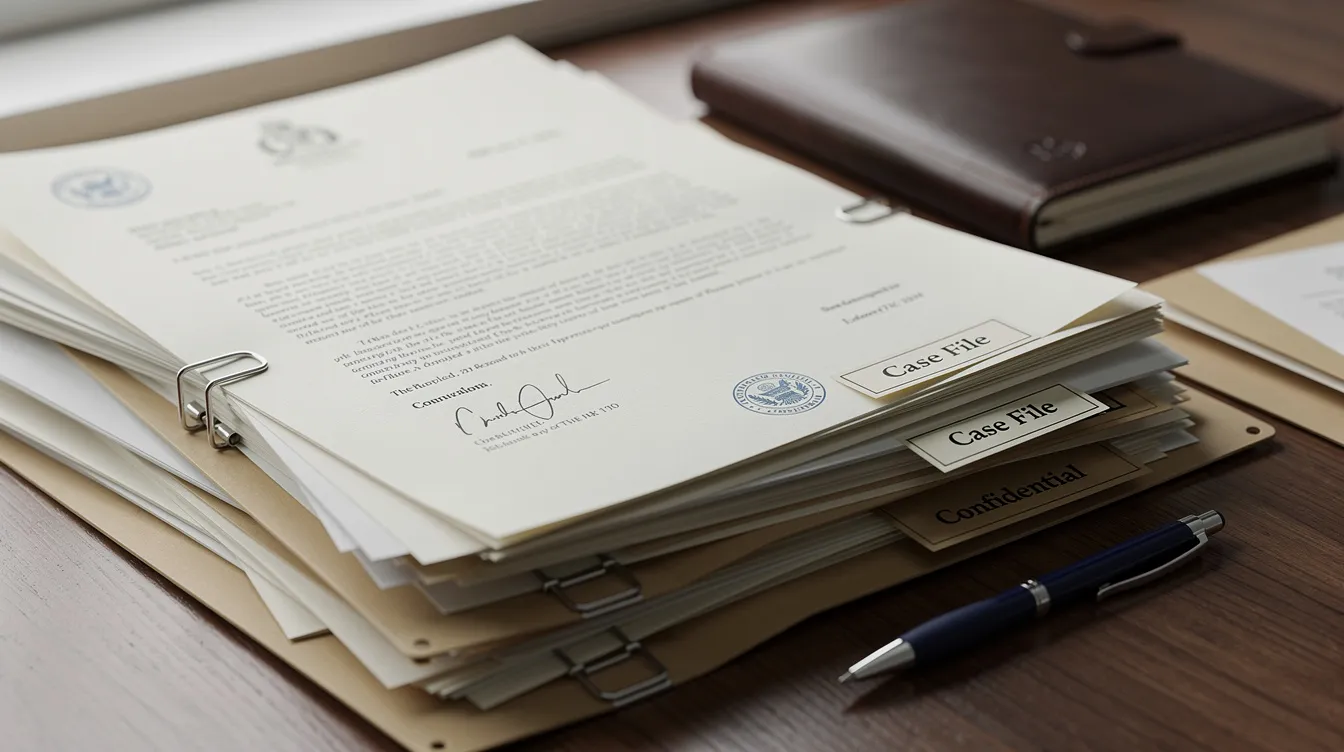
The image shows a stack of official government correspondence and legal documents neatly arranged on a desk, reflecting the trademark registration process. Among these papers are trademark applications, office actions, and responses that may involve legal arguments related to trademark law and potential refusals from the trademark office.

Why Work with a Trademark Office Action Attorney?

Office actions are legal documents, and your response becomes part of the permanent USPTO record-affecting current and future filings. Responses must address specific concerns raised by the USPTO, and a misstep can limit your rights for years.

Here’s what an experienced trademark attorney brings to the table:

  • Interpreting citations and case law: A trademark office action attorney evaluates official refusals issued by trademark examiners, including the specific reasons cited, case law references, and USPTO guidelines.
  • Crafting targeted arguments: Attorneys draft responses based on precedent and the Trademark Manual of Examining Procedure (TMEP), aligning legal argument with your business reality.
  • Proposing strategic amendments: Suggesting changes to your identification of goods or services, specimens, or filing basis that maintain brand value while satisfying the trademark office.
  • Avoiding harmful admissions: Ensuring your response doesn’t include statements that unintentionally limit rights or weaken future enforcement.
  • Managing examiner communication: Trademark office action attorneys can manage communication with examining attorneys to resolve minor issues efficiently, often through phone calls or email exchanges.

Legal analyses by attorneys can determine if examiner arguments are valid or if there are strong grounds to push back. Limelight Law routinely handles office actions for Washington, DC and Florida businesses, startups, e-commerce brands, and creatives.

Ready to get a clear strategy? Schedule a review through the Limelight Law contact form to have your office action analyzed in detail.

How Limelight Law Analyzes Your Trademark Office Action

Limelight Law takes a methodical, business-focused approach to every office action review. The goal is not just legal compliance-it’s protecting the brand you’ve built while keeping the registration process on track.

Here’s how the analysis typically works:

  1. Reviewing every cited ground: Carefully reading each cited registration, pending application, and legal basis in the office action to understand exactly what the examining attorney is challenging.
  2. Comparing marks and marketplace reality: Evaluating your mark’s wording, design, and commercial impression against cited marks, considering how consumers associate your brand versus the cited one.
  3. Assessing identification and classification: Reviewing the identification of goods and services to determine if narrowing, clarifying, or reclassifying can help resolve the refusal without sacrificing protection.
  4. Evaluating specimens: Checking that your proof of actual use in commerce meets USPTO standards and identifying gaps that need to be addressed.

Attorneys ensure applications comply with USPTO formatting and procedural requirements throughout this process. Attorney Bryn Owen’s background in technology, healthcare, and entertainment licensing helps frame legal arguments in real-world business terms that resonate with examining attorneys.

Part of the analysis is risk-based: assessing whether to fight, compromise, or pivot to a new application depending on your unique circumstances, growth plans, and budget.

An attorney and a client are engaged in a consultation, reviewing trademark application documents together. They discuss various legal issues related to the trademark registration process, including potential office actions and responses required by the USPTO.

Responding to Likelihood of Confusion Refusals

Section 2(d) refusals-where the USPTO finds your mark too similar to an existing registration-are among the most common substantive refusals. Trademark applications can be rejected due to likelihood of confusion even when the marks are not identical, as long as they are similar enough in the context of related goods or services.

The examining attorney evaluates confusion using factors known as the DuPont factors:

  • Similarities in the marks’ appearance, sound, meaning, and overall commercial impression
  • Relatedness of the goods and services in the marketplace
  • Channels of trade and classes of consumers who encounter the marks
  • Strength or weakness of the cited mark

Typical response strategies include:

  • Arguing differences in sight, sound, and meaning using real-world examples and side-by-side comparisons
  • Narrowing or clarifying the identification of goods or services to reduce overlap with the cited registration
  • Introducing other evidence that consumers are sophisticated, that the terms are weak due to widespread third-party use, or that there has been no actual confusion
  • Providing a detailed explanation of how the marks create different commercial impressions

In limited cases, coexistence or consent agreements with the owner of the cited registration may be considered-but these carry business and enforcement risks that should be weighed carefully.

Trademark attorneys draft persuasive legal arguments to counter examination refusals, and Limelight Law helps clients in DC and Florida evaluate whether to push forward, negotiate, or consider a new application when confusion issues arise.

Responding to Descriptiveness, Genericness, and “Failure to Function” Refusals

Many office actions from the USPTO claim marks are “merely descriptive,” generic, or used as ornamentation instead of functioning as trademarks. Each of these requires a tailored approach.

Descriptiveness refusals can be addressed by:

  • Arguing that the mark is suggestive or incongruous, requiring a mental leap to connect it to the goods or services
  • Providing evidence that the wording is not commonly used in the industry to describe the relevant products
  • Claiming acquired distinctiveness (secondary meaning) through long-term use, advertising spend, and consumer recognition
  • In some cases, amending to the supplemental register as a stepping stone toward the Principal Register

Generic terms cannot be registered at all. If your mark is found generic, it may require a branding pivot or a new application built around a more distinctive element.

Failure to function issues arise when marks are used as ornamentation or informational matter rather than source identifiers. For example, the TTAB found the phrase “I LOVE YOU” displayed prominently on merchandise to be ornamental rather than trademark use. Adjusting specimen use-such as showing the mark on product packaging tags, labels, or in a source-identifying position-can sometimes resolve these concerns.

Limelight Law tailors these responses to creatives, influencers, and e-commerce brands whose marketing style often triggers ornamentation concerns, particularly in apparel and lifestyle products.

Fixing Identification, Specimen, and Other Technical Issues

This is where many DIY applications run into trouble. Technical issues with identifications and specimens are among the most common reasons office actions require additional work.

Common identification problems include:

  • Overly broad wording that spans multiple classes without proper application fees
  • Indefinite descriptions that the examining attorney cannot classify
  • Goods and services that do not match how you actually use the mark in commerce

Key specimen issues to watch for:

  • Digital mockups or “coming soon” webpages that do not show current use in commerce
  • Service specimens that fail to show a direct association between the mark and the services offered
  • Use-based filings where actual use had not started on the stated filing date

Correcting procedural issues like improper specimens is a common duty for trademark attorneys, who can draft precise identifications and help gather compliant specimens. Sometimes converting the filing basis (for example, from use-based to intent-to-use) makes sense depending on the timeline.

If you received specimen or identification objections, reach out through the Limelight Law contact page before attempting changes that could unintentionally narrow your rights.

When to Appeal, Request Reconsideration, or File a New Application

Not every final refusal should be appealed. Sometimes a narrower new application or even a rebrand is the smarter business decision. Here are the primary options after a final office action:

OptionWhat It InvolvesBest For
Request for ReconsiderationAsking the examining attorney to review new arguments or other evidence after a final actionCases where you have new facts or a refined legal argument
Appeal to the Trademark Trial and Appeal Board (TTAB)A formal, record-based challenge before the USPTO’s trademark trial and appeal boardStrong legal disagreements with the examiner’s interpretation
New ApplicationFiling fresh with a revised mark or refined description of goods or servicesSituations where a modified brand gives a stronger registrability position

The appeal board reviews the examining attorney’s decision de novo, focusing on legal interpretation-but appeals take time and involve additional fees. Filing a new application may bypass the specific reasons for refusal if the mark or identification has been meaningfully changed.

Limelight Law helps weigh cost, timing, and brand equity when choosing among these options. Decisions here affect long-term enforcement and licensing, so experienced guidance from trademark attorneys is especially important for startups and growing brands.

How Limelight Law Works with DC and Florida Businesses, Startups, and Creators

Limelight Law is a business-minded trademark firm serving Washington, DC and Florida entrepreneurs, small businesses, creatives, and professional service firms. Trademark attorneys help navigate complex trademark application processes across industries-from e-commerce and apparel to entertainment and professional services.

The firm’s trademark services relevant to office actions include:

  • Clearance searches and risk assessments before filing a new application
  • Preparing and prosecuting U.S. trademark applications from start to federal trademark registration
  • Responding to USPTO office actions, including complex substantive refusals
  • Ongoing enforcement, monitoring, and maintenance filings after registration

Attorney Bryn Owen is admitted in the District of Columbia and Florida, with a background spanning technology, healthcare, and entertainment licensing work-including roles at The Pokémon Company and Beanstalk. This real-world experience helps other businesses and brands receive practical, commercially grounded advice.

Call (202) 998-7991 or use the firm’s online contact form to schedule a consultation about your specific office action.

What to Expect When You Hire Limelight Law for an Office Action Response

Working with Limelight Law on your office action response is designed to feel clear and manageable, even when the legal issues are complex. An office action attorney provides ongoing guidance during the trademark application process, so you’re never left guessing about next steps.

Here’s the typical process:

  1. Initial consultation: Review the office action, your business model, and your objectives. Attorneys assist in crafting strong responses to office actions based on your unique circumstances.
  2. Clear pricing: Fixed-fee or clearly scoped pricing for the office action response whenever possible-no surprise bills.
  3. Drafting and collaboration: The response is drafted with plain-language explanations of each legal argument, revised in collaboration with you to ensure business alignment.
  4. Filing and monitoring: Electronic filing through a secure USPTO.gov account, followed by monitoring for further actions or approvals.

After filing, the examining attorney’s next action often takes several months. Limelight Law tracks these timelines and follows up as needed. The goal: make a complete and persuasive response that moves your mark toward registration.

Should You Handle a Trademark Office Action on Your Own?

The USPTO does not require U.S.-domiciled individuals and entities to hire counsel for trademark matters. But the rules, case law, and procedural requirements are genuinely complex-and the stakes are real.

Practical risks of DIY responses include:

  • Misreading the examining attorney’s concerns and making unnecessary concessions that limit your rights
  • Filing an incomplete response or missing the response deadline entirely, resulting in abandonment
  • Creating a public record that weakens your ability to enforce your mark against competitors later
  • Spending more time and money fixing mistakes than working with counsel from the start

An applicant who handles the response without counsel may save on fees upfront, but trademark attorneys have higher approval rates than non-attorneys. For foreign-domiciled applicants, USPTO rules require representation by a U.S.-licensed attorney for trademark matters, so self-filing is not an option.

Even if you ultimately decide to respond on your own, having Limelight Law quickly review your office action can flag issues you might miss. Call (202) 998-7991 or visit the contact page for a focused review.

Get Help with Your Trademark Office Action from Limelight Law

Your trademark application, brand identity, and future growth are too important to risk on an unclear response. Legal guidance can increase chances of trademark application success, and the difference between a well-crafted response and a rushed one can determine whether your mark reaches registration or gets abandoned.

Limelight Law focuses on trademarks, business law, contracts, and entertainment law for clients in Washington, DC and Florida, with significant experience in office actions and registration strategy across industries.

If you’ve received a recent USPTO refusal or any other office action, here’s what to do next:

  • Call (202) 998-7991 to speak directly with Limelight Law about your office action.
  • Contact us online to submit your office action letter for review.
  • E-commerce brands, creators, and startups: Use the contact form to request a focused office action strategy plan aligned with your launch timelines.

The sooner you act before the response deadline, the more options you typically have. Don’t let a fixable refusal turn into a lost brand.

A confident entrepreneur is seated at a laptop, actively working on a trademark application while surrounded by branded products. The scene highlights the importance of trademark registration and the trademark application process in building a successful business.

Frequently Asked Questions About Trademark Office Actions

Does receiving an office action mean my trademark application is permanently rejected?

No. Most nonfinal office actions are invitations to fix issues or provide arguments-not permanent rejections. Many applications proceed to publication or registration after a strong response that addresses the specific reasons for refusal. Even final office actions can sometimes be overcome through a request for reconsideration or an appeal to the USPTO’s trademark trial and appeal board, depending on the facts. Have a trademark attorney review your situation before assuming your application is dead.

How long does it take to get a decision after I file an office action response?

The examining attorney’s next action typically takes several months-commonly two to six months depending on USPTO workload and complexity. The result may be approval for publication, a new nonfinal action raising different issues, or a final refusal. Limelight Law tracks these timelines and follows up on behalf of clients to keep the process moving.

Can I keep using my trademark in the United States if my application is ultimately refused?

Federal trademark registration is not required to use a mark in U.S. commerce. However, refusal may signal higher legal risk or limited geographic and enforcement rights. Whether continued use makes sense depends on the refusal ground-a strong likelihood of confusion finding carries different implications than a curable specimen objection. Consult with Limelight Law for a tailored risk assessment before deciding whether to continue or rebrand.

What information should I gather before speaking with a trademark office action attorney?

As the applicant, prepare a copy of the office action, the original trademark application serial number, any prior correspondence with the USPTO, and examples of how you actually use the mark in commerce-including websites, product photos, and marketing materials-before speaking with counsel. Be ready to explain your business model, target markets, and growth plans so the attorney can align legal strategy with business priorities. You can upload these materials when you contact Limelight Law online or call (202) 998-7991.

Can Limelight Law help with new trademark applications as well as office actions?

Yes. Limelight Law assists with the full lifecycle of trademark protection-from clearance searches and filing new applications to responding to office actions and maintaining registrations after approval. Starting with a strong application through a free consultation and thorough clearance process can reduce the chances of receiving substantive refusals later. If you’re planning a new brand, product line, or creative project in Washington, DC or Florida, reach out early via the firm’s trademark services page or the main contact page.

Trademark Office Action Attorney: How to Respond to a USPTO Trademark Refusal

Receiving an office action from the United States Patent and Trademark Office can feel like a gut punch-especially when you’ve already invested time and money into building your brand. But here’s the reality: office actions are common, and most of them can be resolved with the right strategy and a well-prepared response. This guide breaks down exactly what trademark office actions are, why they happen, and how a trademark office action attorney can help you keep your application on track.

Key Takeaways

  • An office action from the USPTO is a formal letter listing legal problems with a trademark application that must be resolved before registration can proceed. Most are fixable with a clear, well-crafted office action response.
  • Limelight Law, based in Washington, DC and serving clients in DC and Florida, helps businesses, startups, creators, and professional service firms overcome both procedural and substantive refusals throughout the trademark application process.
  • The response deadline is strict: for most applications filed after December 3, 2022, you have three months to respond, with a potential three-month extension available for additional fees. Missing the deadline usually leads to abandonment.
  • Working with an experienced trademark attorney who understands USPTO practice-including likelihood of confusion and descriptiveness refusals-significantly improves the chances of approval. Trademark attorneys have a significantly higher approval rating than non-attorneys.
  • If you’ve received an office action, call (202) 998-7991 or contact us online for a focused office action strategy session with Limelight Law.

What Is a USPTO Trademark Office Action?

An office action is a written letter from a USPTO examining attorney that identifies problems with your trademark application. Think of it as the government’s way of saying, “We need more from you before we can approve this.”

Office actions can address simple administrative issues-like missing signatures, incorrect entity information, or vague identification of goods or services-as well as more complex legal issues like likelihood of confusion with an existing mark or mere descriptiveness. They are issued by an examining attorney within the U.S. Patent and Trademark Office to the applicant, whether that means a first-time filer or a business with experience submitting trademark applications.

Office actions can be nonfinal or final, and each stage affects your response options differently. A nonfinal office action is typically the first substantive communication, giving you a window to fix errors or present arguments. A final office action signals that the examining attorney found your earlier response insufficient, and your remaining options narrow considerably.

This article focuses on how a trademark office action attorney can help Washington, DC and Florida brands navigate these challenges and keep their trademark registration process moving forward.

A professional is seated at a modern office desk, carefully reviewing trademark documents, which may include trademark applications and office actions related to the trademark registration process. The environment suggests a focus on trademark law and the responsibilities of a trademark attorney in navigating legal issues and responding to the USPTO's examining attorney.

Common Reasons the USPTO Refuses a Trademark Application

Refusals are not personal. They are based on the Lanham Act and trademark law rules applied to your specific filing. A trademark attorney can conduct clearance searches for conflicting marks prior to filing, which reduces surprise refusals-but even well-prepared applications sometimes receive office actions.

Common reasons for office actions include likelihood of confusion and descriptiveness refusals, among others. Here are the most frequent grounds:

  • Likelihood of confusion with an existing registration or prior-filed application under Section 2(d)-this is the single most common reason for refusal at the USPTO.
  • Mere descriptiveness, genericness, or geographic origin issues where the mark immediately describes qualities, ingredients, or the geographic origin of the goods or services.
  • Deceptively misdescriptive wording that misleads consumers about the nature of what you offer.
  • Failure to function as a trademark-for example, slogans used purely as ornamentation on product packaging rather than as source identifiers.
  • Specimen problems such as mockups, wrong class of goods or services, or evidence that doesn’t show actual use in commerce.
  • Information or disclaimer requirements where the examining attorney needs you to disclaim a descriptive or generic element.

Many of these substantive refusals can be overcome or narrowed with evidence, legal argument, or carefully revised identifications. A comprehensive clearance search before filing reduces the risk of a conflicting trademark refusal.

Procedural vs. Substantive Office Actions

Office actions generally fall into two groups, and each calls for a different response strategy. Office actions can be issued for administrative or substantive reasons, and understanding the distinction is the first step toward an effective response.

Procedural issues typically involve:

  • Missing or incorrect owner information or signatures
  • Identification and classification problems for goods and services
  • Entity status or domicile details needed to comply with USPTO rules
  • Minor formatting errors or incomplete response elements

Substantive refusals involve deeper legal issues:

  • Likelihood of confusion under Section 2(d) with a prior mark
  • Descriptiveness or genericness under Section 2(e), including marks that consumers associate with qualities rather than a specific source
  • Failure to function as a mark, informational matter, or ornamentation concerns

Procedural issues may be corrected with precise amendments, while substantive refusals usually need persuasive legal arguments and factual evidence. A trademark office action attorney is essential for diagnosing which issues are straightforward fixes and which require a more strategic, evidence-driven approach.

Understanding Your Office Action Response Deadline

The response deadline is strict, and missing it usually causes your trademark application to become abandoned. Failure to respond can result in application abandonment-period.

For most USPTO trademark office actions issued on or after December 3, 2022, the applicant has three months to respond, with an optional three-month extension available for a government fee. This was a significant change from the previous rule, where you had to respond to office actions within six months without needing an extension.

Important details to keep in mind:

  • Older applications and certain international filings (such as Madrid Protocol applications under Section 66(a)) may still carry a six months response deadline with no extension option.
  • Trademark applications can be abandoned if deadlines are missed, and there is typically no second chance.
  • A notice of incomplete response does not reset the original deadline. You must cure any defects within the remaining time.
  • Attorneys track strict response windows for trademark applications to ensure nothing slips through the cracks.

Responses to office actions must be submitted within the applicable timeframe-whether that’s three months or six months depending on your filing date and basis.

If you are within 30–45 days of your deadline, don’t wait. Call (202) 998-79911) or contact Limelight Law online for expedited review of your office action.

Types of USPTO Office Actions You Might Receive

Not every letter from the USPTO is a refusal. Some are updates or procedural notices that affect your timeline without requiring a full written response. Here are other common types of communications you might see:

  • Non final office action: The first substantive refusal or requirement. A non final office action gives the applicant a window to fix errors or argue against refusals with a detailed explanation and supporting evidence.
  • Final office action: Issued when unresolved issues raised in the nonfinal stage remain. The applicant must definitively resolve the refusal or appeal it before abandonment becomes a risk. A final office action gives one last chance to respond before the application faces abandonment.
  • Suspension letter: Places the application on hold due to a prior-filed conflicting mark, a foreign registration proceeding, or related litigation.
  • Examiner’s amendment: Confirms minor changes agreed to by phone or email with the examining attorney. These typically do not require a separate response.
  • Priority action: Written confirmation after a discussion with the examiner, often with a shorter timeline for addressing nonfinal issues.

Understanding each letter’s legal effect helps determine whether to negotiate, submit additional evidence, or adjust strategy. A trademark office action attorney can review your full prosecution history and explain the practical meaning of each USPTO communication.

The image shows a stack of official government correspondence and legal documents neatly arranged on a desk, reflecting the trademark registration process. Among these papers are trademark applications, office actions, and responses that may involve legal arguments related to trademark law and potential refusals from the trademark office.

Why Work with a Trademark Office Action Attorney?

Office actions are legal documents, and your response becomes part of the permanent USPTO record-affecting current and future filings. Responses must address specific concerns raised by the USPTO, and a misstep can limit your rights for years.

Here’s what an experienced trademark attorney brings to the table:

  • Interpreting citations and case law: A trademark office action attorney evaluates official refusals issued by trademark examiners, including the specific reasons cited, case law references, and USPTO guidelines.
  • Crafting targeted arguments: Attorneys draft responses based on precedent and the Trademark Manual of Examining Procedure (TMEP), aligning legal argument with your business reality.
  • Proposing strategic amendments: Suggesting changes to your identification of goods or services, specimens, or filing basis that maintain brand value while satisfying the trademark office.
  • Avoiding harmful admissions: Ensuring your response doesn’t include statements that unintentionally limit rights or weaken future enforcement.
  • Managing examiner communication: Trademark office action attorneys can manage communication with examining attorneys to resolve minor issues efficiently, often through phone calls or email exchanges.

Legal analyses by attorneys can determine if examiner arguments are valid or if there are strong grounds to push back. Limelight Law routinely handles office actions for Washington, DC and Florida businesses, startups, e-commerce brands, and creatives.

Ready to get a clear strategy? Schedule a review through the Limelight Law contact form to have your office action analyzed in detail.

How Limelight Law Analyzes Your Trademark Office Action

Limelight Law takes a methodical, business-focused approach to every office action review. The goal is not just legal compliance-it’s protecting the brand you’ve built while keeping the registration process on track.

Here’s how the analysis typically works:

  1. Reviewing every cited ground: Carefully reading each cited registration, pending application, and legal basis in the office action to understand exactly what the examining attorney is challenging.
  2. Comparing marks and marketplace reality: Evaluating your mark’s wording, design, and commercial impression against cited marks, considering how consumers associate your brand versus the cited one.
  3. Assessing identification and classification: Reviewing the identification of goods and services to determine if narrowing, clarifying, or reclassifying can help resolve the refusal without sacrificing protection.
  4. Evaluating specimens: Checking that your proof of actual use in commerce meets USPTO standards and identifying gaps that need to be addressed.

Attorneys ensure applications comply with USPTO formatting and procedural requirements throughout this process. Attorney Bryn Owen’s background in technology, healthcare, and entertainment licensing helps frame legal arguments in real-world business terms that resonate with examining attorneys.

Part of the analysis is risk-based: assessing whether to fight, compromise, or pivot to a new application depending on your unique circumstances, growth plans, and budget.

An attorney and a client are engaged in a consultation, reviewing trademark application documents together. They discuss various legal issues related to the trademark registration process, including potential office actions and responses required by the USPTO.

Responding to Likelihood of Confusion Refusals

Section 2(d) refusals-where the USPTO finds your mark too similar to an existing registration-are among the most common substantive refusals. Trademark applications can be rejected due to likelihood of confusion even when the marks are not identical, as long as they are similar enough in the context of related goods or services.

The examining attorney evaluates confusion using factors known as the DuPont factors:

  • Similarities in the marks’ appearance, sound, meaning, and overall commercial impression
  • Relatedness of the goods and services in the marketplace
  • Channels of trade and classes of consumers who encounter the marks
  • Strength or weakness of the cited mark

Typical response strategies include:

  • Arguing differences in sight, sound, and meaning using real-world examples and side-by-side comparisons
  • Narrowing or clarifying the identification of goods or services to reduce overlap with the cited registration
  • Introducing other evidence that consumers are sophisticated, that the terms are weak due to widespread third-party use, or that there has been no actual confusion
  • Providing a detailed explanation of how the marks create different commercial impressions

In limited cases, coexistence or consent agreements with the owner of the cited registration may be considered-but these carry business and enforcement risks that should be weighed carefully.

Trademark attorneys draft persuasive legal arguments to counter examination refusals, and Limelight Law helps clients in DC and Florida evaluate whether to push forward, negotiate, or consider a new application when confusion issues arise.

Responding to Descriptiveness, Genericness, and “Failure to Function” Refusals

Many office actions from the USPTO claim marks are “merely descriptive,” generic, or used as ornamentation instead of functioning as trademarks. Each of these requires a tailored approach.

Descriptiveness refusals can be addressed by:

  • Arguing that the mark is suggestive or incongruous, requiring a mental leap to connect it to the goods or services
  • Providing evidence that the wording is not commonly used in the industry to describe the relevant products
  • Claiming acquired distinctiveness (secondary meaning) through long-term use, advertising spend, and consumer recognition
  • In some cases, amending to the supplemental register as a stepping stone toward the Principal Register

Generic terms cannot be registered at all. If your mark is found generic, it may require a branding pivot or a new application built around a more distinctive element.

Failure to function issues arise when marks are used as ornamentation or informational matter rather than source identifiers. For example, the TTAB found the phrase “I LOVE YOU” displayed prominently on merchandise to be ornamental rather than trademark use. Adjusting specimen use-such as showing the mark on product packaging tags, labels, or in a source-identifying position-can sometimes resolve these concerns.

Limelight Law tailors these responses to creatives, influencers, and e-commerce brands whose marketing style often triggers ornamentation concerns, particularly in apparel and lifestyle products.

Fixing Identification, Specimen, and Other Technical Issues

This is where many DIY applications run into trouble. Technical issues with identifications and specimens are among the most common reasons office actions require additional work.

Common identification problems include:

  • Overly broad wording that spans multiple classes without proper application fees
  • Indefinite descriptions that the examining attorney cannot classify
  • Goods and services that do not match how you actually use the mark in commerce

Key specimen issues to watch for:

  • Digital mockups or “coming soon” webpages that do not show current use in commerce
  • Service specimens that fail to show a direct association between the mark and the services offered
  • Use-based filings where actual use had not started on the stated filing date

Correcting procedural issues like improper specimens is a common duty for trademark attorneys, who can draft precise identifications and help gather compliant specimens. Sometimes converting the filing basis (for example, from use-based to intent-to-use) makes sense depending on the timeline.

If you received specimen or identification objections, reach out through the Limelight Law contact page before attempting changes that could unintentionally narrow your rights.

When to Appeal, Request Reconsideration, or File a New Application

Not every final refusal should be appealed. Sometimes a narrower new application or even a rebrand is the smarter business decision. Here are the primary options after a final office action:

OptionWhat It InvolvesBest For
Request for ReconsiderationAsking the examining attorney to review new arguments or other evidence after a final actionCases where you have new facts or a refined legal argument
Appeal to the Trademark Trial and Appeal Board (TTAB)A formal, record-based challenge before the USPTO’s trademark trial and appeal boardStrong legal disagreements with the examiner’s interpretation
New ApplicationFiling fresh with a revised mark or refined description of goods or servicesSituations where a modified brand gives a stronger registrability position

The appeal board reviews the examining attorney’s decision de novo, focusing on legal interpretation-but appeals take time and involve additional fees. Filing a new application may bypass the specific reasons for refusal if the mark or identification has been meaningfully changed.

Limelight Law helps weigh cost, timing, and brand equity when choosing among these options. Decisions here affect long-term enforcement and licensing, so experienced guidance from trademark attorneys is especially important for startups and growing brands.

How Limelight Law Works with DC and Florida Businesses, Startups, and Creators

Limelight Law is a business-minded trademark firm serving Washington, DC and Florida entrepreneurs, small businesses, creatives, and professional service firms. Trademark attorneys help navigate complex trademark application processes across industries-from e-commerce and apparel to entertainment and professional services.

The firm’s trademark services relevant to office actions include:

  • Clearance searches and risk assessments before filing a new application
  • Preparing and prosecuting U.S. trademark applications from start to federal trademark registration
  • Responding to USPTO office actions, including complex substantive refusals
  • Ongoing enforcement, monitoring, and maintenance filings after registration

Attorney Bryn Owen is admitted in the District of Columbia and Florida, with a background spanning technology, healthcare, and entertainment licensing work-including roles at The Pokémon Company and Beanstalk. This real-world experience helps other businesses and brands receive practical, commercially grounded advice.

Call (202) 998-7991 or use the firm’s online contact form to schedule a consultation about your specific office action.

What to Expect When You Hire Limelight Law for an Office Action Response

Working with Limelight Law on your office action response is designed to feel clear and manageable, even when the legal issues are complex. An office action attorney provides ongoing guidance during the trademark application process, so you’re never left guessing about next steps.

Here’s the typical process:

  1. Initial consultation: Review the office action, your business model, and your objectives. Attorneys assist in crafting strong responses to office actions based on your unique circumstances.
  2. Clear pricing: Fixed-fee or clearly scoped pricing for the office action response whenever possible-no surprise bills.
  3. Drafting and collaboration: The response is drafted with plain-language explanations of each legal argument, revised in collaboration with you to ensure business alignment.
  4. Filing and monitoring: Electronic filing through a secure USPTO.gov account, followed by monitoring for further actions or approvals.

After filing, the examining attorney’s next action often takes several months. Limelight Law tracks these timelines and follows up as needed. The goal: make a complete and persuasive response that moves your mark toward registration.

Should You Handle a Trademark Office Action on Your Own?

The USPTO does not require U.S.-domiciled individuals and entities to hire counsel for trademark matters. But the rules, case law, and procedural requirements are genuinely complex-and the stakes are real.

Practical risks of DIY responses include:

  • Misreading the examining attorney’s concerns and making unnecessary concessions that limit your rights
  • Filing an incomplete response or missing the response deadline entirely, resulting in abandonment
  • Creating a public record that weakens your ability to enforce your mark against competitors later
  • Spending more time and money fixing mistakes than working with counsel from the start

An applicant who handles the response without counsel may save on fees upfront, but trademark attorneys have higher approval rates than non-attorneys. For foreign-domiciled applicants, USPTO rules require representation by a U.S.-licensed attorney for trademark matters, so self-filing is not an option.

Even if you ultimately decide to respond on your own, having Limelight Law quickly review your office action can flag issues you might miss. Call (202) 998-7991 or visit the contact page for a focused review.

Get Help with Your Trademark Office Action from Limelight Law

Your trademark application, brand identity, and future growth are too important to risk on an unclear response. Legal guidance can increase chances of trademark application success, and the difference between a well-crafted response and a rushed one can determine whether your mark reaches registration or gets abandoned.

Limelight Law focuses on trademarks, business law, contracts, and entertainment law for clients in Washington, DC and Florida, with significant experience in office actions and registration strategy across industries.

If you’ve received a recent USPTO refusal or any other office action, here’s what to do next:

  • Call (202) 998-7991 to speak directly with Limelight Law about your office action.
  • Contact us online to submit your office action letter for review.
  • E-commerce brands, creators, and startups: Use the contact form to request a focused office action strategy plan aligned with your launch timelines.

The sooner you act before the response deadline, the more options you typically have. Don’t let a fixable refusal turn into a lost brand.

A confident entrepreneur is seated at a laptop, actively working on a trademark application while surrounded by branded products. The scene highlights the importance of trademark registration and the trademark application process in building a successful business.

Frequently Asked Questions About Trademark Office Actions

Does receiving an office action mean my trademark application is permanently rejected?

No. Most nonfinal office actions are invitations to fix issues or provide arguments-not permanent rejections. Many applications proceed to publication or registration after a strong response that addresses the specific reasons for refusal. Even final office actions can sometimes be overcome through a request for reconsideration or an appeal to the USPTO’s trademark trial and appeal board, depending on the facts. Have a trademark attorney review your situation before assuming your application is dead.

How long does it take to get a decision after I file an office action response?

The examining attorney’s next action typically takes several months-commonly two to six months depending on USPTO workload and complexity. The result may be approval for publication, a new nonfinal action raising different issues, or a final refusal. Limelight Law tracks these timelines and follows up on behalf of clients to keep the process moving.

Can I keep using my trademark in the United States if my application is ultimately refused?

Federal trademark registration is not required to use a mark in U.S. commerce. However, refusal may signal higher legal risk or limited geographic and enforcement rights. Whether continued use makes sense depends on the refusal ground-a strong likelihood of confusion finding carries different implications than a curable specimen objection. Consult with Limelight Law for a tailored risk assessment before deciding whether to continue or rebrand.

What information should I gather before speaking with a trademark office action attorney?

As the applicant, prepare a copy of the office action, the original trademark application serial number, any prior correspondence with the USPTO, and examples of how you actually use the mark in commerce-including websites, product photos, and marketing materials-before speaking with counsel. Be ready to explain your business model, target markets, and growth plans so the attorney can align legal strategy with business priorities. You can upload these materials when you contact Limelight Law online or call (202) 998-7991.

Can Limelight Law help with new trademark applications as well as office actions?

Yes. Limelight Law assists with the full lifecycle of trademark protection-from clearance searches and filing new applications to responding to office actions and maintaining registrations after approval. Starting with a strong application through a free consultation and thorough clearance process can reduce the chances of receiving substantive refusals later. If you’re planning a new brand, product line, or creative project in Washington, DC or Florida, reach out early via the firm’s trademark services page or the main contact page.

Attorney Advertising
Website developed in accordance with Web Content Accessibility Guidelines 2.2.
If you encounter any issues while using this site, please contact us: (202) 998-7991